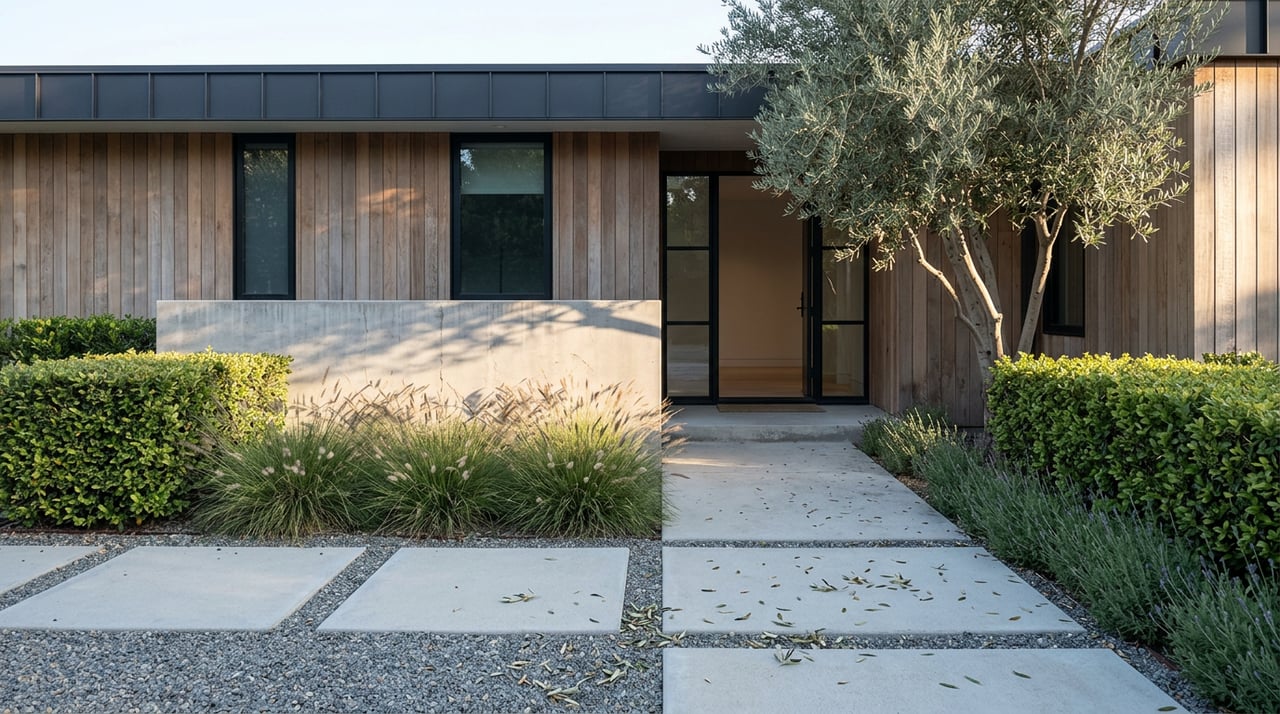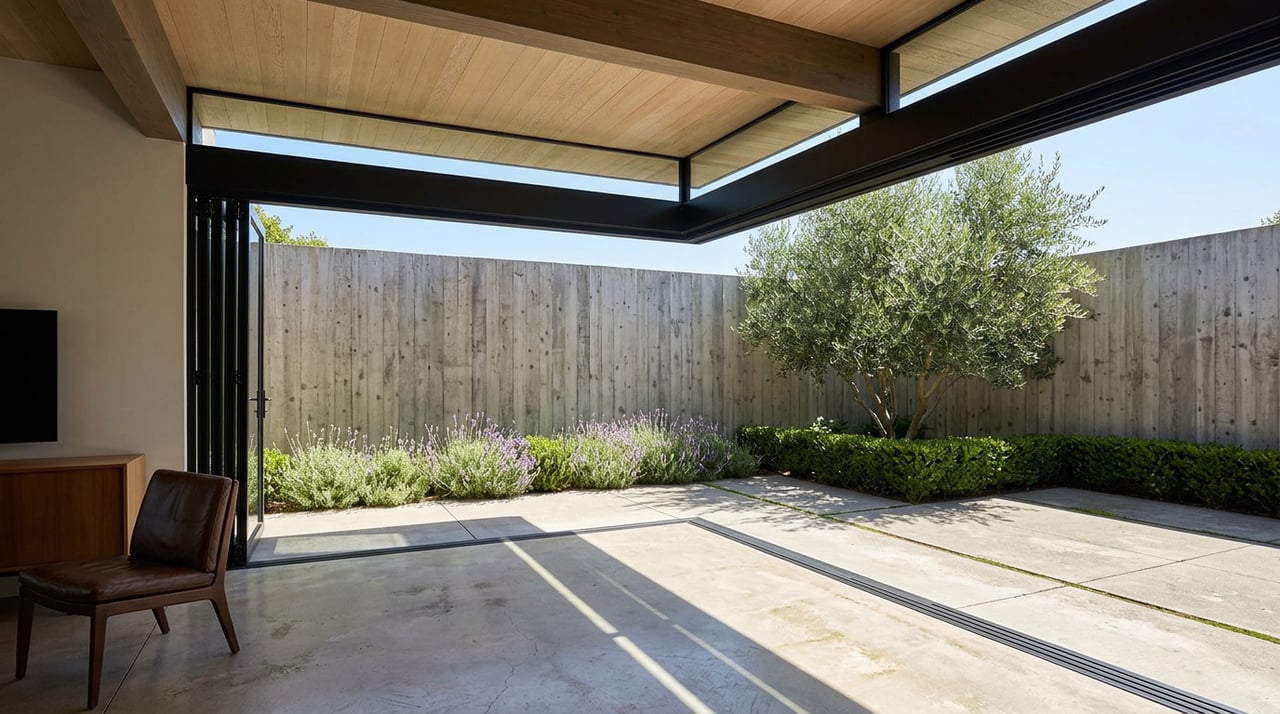
Every Eichler listing in Palo Alto eventually gets to the radiant heat question. Buyers ask about it before they ask about schools. Agents warn about it in the first walk-through. The assumption, understandable given how much has been written about corroded slab pipes, is that the heating system is the thing standing between a smooth sale and a blown deal.
It isn't. The system itself, working or not, is a known quantity with a known price tag. What actually stalls Eichler transactions in Greenmeadow, Fairmeadow, Green Gables and the two dozen or so other tracts scattered across the city is the absence of a paper trail around that system and the additions built around it. In a market where a home can draw three offers in a week, the seller who can document a house wins. The seller who can only vouch for it does not.
The Number Buyers Actually Fear, and Why It's the Wrong Number
Palo Alto's Eichler stock traces back to roughly 2,700 homes built across the 1950s, 60s, and into the 1970s, spread over about 30 tracts designed largely by Anshen+Allen and Jones & Emmons. Seven decades of teardowns and remodels have thinned that number, but the tracts that remain, Greenmeadow, Fairmeadow, Green Gables, Charleston Meadows, Los Arboles, Walnut Grove, and Greer Park among them, still share one structural fact: the original heating system is copper or steel tubing poured directly into the concrete slab.
A general home inspector cannot certify that system. The specialty belongs to hydronic heating contractors licensed under the state's C-4 classification, and a separate radiant inspection is standard advice from nearly every specialist who works on these homes regularly. When that inspection turns up a problem, the cost split is stark. A concealed leak repair typically runs between $1,250 and $2,500, with reputable contractors capping a full leak-repair job around $7,500. Full system replacement is a different order of expense entirely, running from roughly $20,000 to $40,000 or more once floors are opened.
Which outcome you get depends on the metal in the slab. Copper tubing tends to last for decades because it doesn't corrode in a closed loop. Steel tubing, more common in homes built during the Korean War era when copper was scarce, is not repairable once it starts leaking and typically requires full replacement. That single material distinction, buried in a permit record or a decades-old invoice, is worth tens of thousands of dollars.
A System That Works Today Tells You Nothing About Tomorrow
Here is the part that surprises most buyers and more than a few sellers. A radiant system that heats the house fine during a showing is not evidence that it will still be fine in a year. One veteran radiant heat contractor quoted by Eichler Network put it plainly, saying leaks in these systems are typically "corroding from the outside in," meaning a shower or sink leak seeping into a hairline crack in the slab, not degradation from water sitting inside the pipe itself. That failure mode is invisible from the surface. It shows up as a warm spot on the floor, a spike in the water bill, or nothing at all until the day it becomes a flood.
This is why "it works" is a much weaker statement than sellers assume it is, and why buyers who skip the specialist inspection because the house felt warm during the tour are making a decision with almost no information. The condition of the system at the moment of sale says very little. The documentation behind it says a great deal more: when was it last pressure tested, has it ever been repaired, is there a boiler replacement invoice on file, is the piping copper or steel.
| Scenario | Typical Cost | What Determines the Outcome |
|---|---|---|
| Concealed leak, caught early | $1,250 to $2,500 | Copper piping, leak isolated to one zone |
| Full leak repair, harder access | Up to roughly $7,500 | Extent of slab opened, location of the leak |
| Full system replacement | $20,000 to $40,000+ | Steel piping, or repeated failures in the same zone |
The Paperwork Test California Actually Applies
This is where Eichler transactions collide with California's disclosure law, and where the real risk sits. Under Civil Code section 1102, sellers of one-to-four-unit residential property must deliver a Transfer Disclosure Statement, and Civil Code section 1102.1 makes that requirement non-waivable. An "as-is" sale does not remove it. California courts, going back to Lingsch v. Savage in 1963, have held that a seller must disclose material facts they know about, and that an "as-is" clause does not erase that duty.
The Transfer Disclosure Statement asks directly whether the seller is aware of significant defects in interior walls, ceilings, floors, and heating systems, and whether any additions or repairs were done without permits. For an Eichler, that second question carries more weight than it does in a typical resale. These homes have been remodeled, expanded, and in some cases substantially altered over seventy years, and the additions that create problems at closing are almost always the ones that never went through the city's Building Division. A seller who cannot produce a permit for a converted room or an added bathroom is not just facing a buyer's question. They are facing an insurance question too, since many California property insurers exclude coverage for damage tied to unpermitted work.
The insurance angle extends to the radiant system itself. A burst line is often treated as sudden water damage, and carriers have historically reimbursed a meaningful share, often cited around 90 percent, of the non-plumbing portion of a claim. But that coverage is not universal, and some insurers have started excluding radiant panel leaks specifically. That is a phone call worth making to an insurance agent before a buyer waives an inspection contingency, not after escrow closes.
Why the Tract You're In Changes the Shape of the Paperwork Problem
Not every Eichler tract carries the same documentation burden, and this is where local knowledge actually matters. Greenmeadow and Green Gables both sit on the National Register of Historic Places, a status that adds recognition and, for some buyers, a design pedigree worth paying for, but does not by itself guarantee anything about the slab beneath the floor or the permit file behind an addition. Fairmeadow, known locally for its concentric "Circles" street layout designed by A. Quincy Jones with site planning by Anshen & Allen, sits under a single-story overlay, one of several protections Palo Alto has granted to tracts including Charleston Meadows, Walnut Grove, Los Arboles, and Greer Park to preserve their low-slung character.
Those overlays mean additions in those tracts went through an extra layer of city review, which in the best case leaves a cleaner permit trail and in the worst case means an older addition never got the sign-off the current overlay would require. Either way, a buyer's agent working an Eichler purchase in one of these tracts should expect to ask the zoning question before the radiant question, because the answer shapes what "unpermitted" even means for that specific address.
Inventory scarcity raises the stakes on all of this. As of mid-August 2026, only three Eichlers were listed for sale in Palo Alto, with a median list price just under $3 million and an average price per square foot above $2,100. When supply is that thin, competitive offers move fast and buyers face real pressure to waive contingencies to win. That pressure is exactly the moment an undocumented radiant system or an unpermitted addition stops being a minor footnote and becomes the thing a buyer's attorney references eighteen months later.
Three Calls Before the First Showing
- Pull the permit history for every addition from the City of Palo Alto's Building Division, not just the ones you remember making
- Schedule a radiant system inspection from a C-4 licensed hydronic specialist, separate from the general home inspector
- Call your insurance agent and ask directly how a radiant leak and any unpermitted work would be treated under your current policy
None of this argues against buying or selling in Palo Alto's Eichler tracts. Scarcity alone keeps demand steady, and these homes remain some of the most architecturally distinct inventory on the Peninsula. It argues for treating the paperwork with the same care the architecture deserves, because in this market, the file folder decides more of the outcome than the floor does.
Frequently Asked Questions
Does a National Register listing add resale value on its own? It adds recognition, and for some buyers a design pedigree they're willing to pay for. It does not guarantee anything about the condition of the radiant system or the permit status of past additions, which buyers and their inspectors will still evaluate independently.
If my tract doesn't have a single-story overlay, can it still get one? Yes, through the same petition process other Eichler tracts have used, though it typically requires substantial neighborhood consensus and a city processing fee before it takes effect.
If you're weighing whether to list an Eichler in Palo Alto, or you're trying to make sense of a disclosure package on one you're considering, Bay Area Home Sales can walk through the permit history, the radiant system's likely condition, and what the paperwork actually says before you write or accept an offer. Schedule a free consultation to start that conversation.